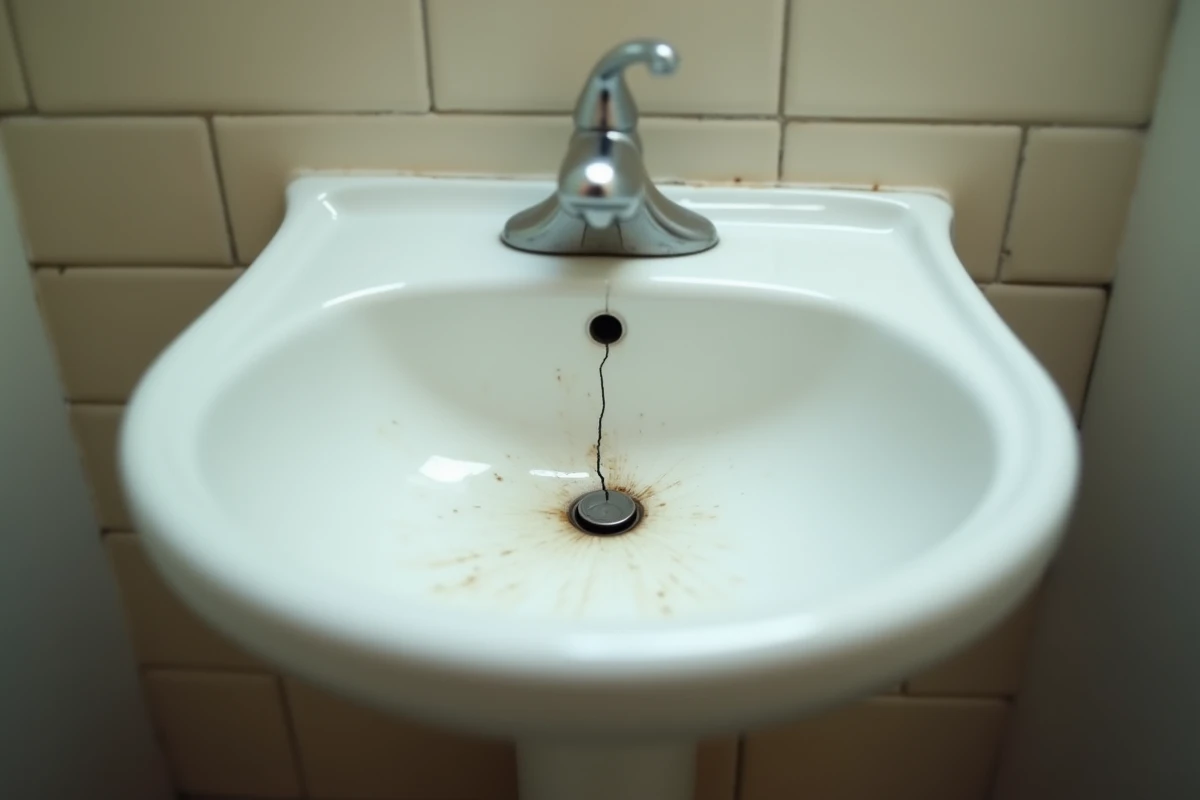
A chip on the basin after a collision with a bottle, a crack that widens over the months for no apparent reason: the situation is common, but the question of payment regularly triggers tensions between tenant and landlord. The replacement of a cracked sink primarily depends on the cause of the damage, and the answer is not always as clear-cut as one would like.
Depreciation grid and cracked sink: the criterion both parties overlook
When a crack is noticed on a sink, the first instinct is to find a culprit. The useful instinct, however, is to check the move-in condition report and the depreciation grid attached to the lease.
The depreciation grid sets a theoretical lifespan for each piece of equipment in the dwelling. For a ceramic sink, this lifespan is generally around fifteen years. If the equipment has exceeded this duration, the responsibility for replacement shifts to the landlord, even in the absence of maintenance issues on the landlord’s side.
In practice, many leases do not include a depreciation grid. In this case, one relies on the comparative move-in/move-out condition report and the judge’s assessment in case of dispute. A sink installed over twenty years ago, with visibly worn enamel, will be difficult to attribute to the tenant. To properly understand who should pay for the replacement of a cracked sink, it is essential to cross-reference the cause of the damage with the age of the equipment.

Accidental crack in the sink: tenant’s obligations
A heavy object falls into the basin, a sudden thermal shock (boiling water poured onto cold ceramic) causes a chip: this type of damage falls under the tenant’s responsibility. The 1987 decree on rental repairs places the routine maintenance of sanitary equipment on the occupant.
Specifically, if the crack results from abnormal use or carelessness, the tenant must cover the replacement costs. This includes the sink itself, the faucet if it was damaged in the same incident, and the installation labor.
What the tenant must document
- Take dated photos of the crack as soon as it is discovered, with a wide shot showing the entire sink and a close-up of the impact point
- Check if the multi-risk home insurance covers the breakage of sanitary items: some “extended glass breakage” guarantees cover items akin to glazing, including ceramic basins
- Notify the landlord or property manager in writing (email or registered letter) before any intervention, to avoid a dispute over the choice of model or service provider
Since 2022, several insurers like Matmut have included coverage for the breakage of sanitary items in their home insurance contracts. Checking one’s extended glass breakage coverage can prevent an expense of several hundred euros.
Sink cracked due to wear or structural defect: landlord’s responsibility
A crack that appears gradually, without an identifiable impact, points to wear or a structural issue. Enamel that cracks over time, a wall fixture that shifts due to humidity, a faulty installation from the start: these situations fall under the landlord’s obligations.
The landlord is required to provide decent housing with equipment in good working order. A cracked sink that leaks or risks breaking further no longer meets this condition. The landlord must then replace the equipment at their own expense, including installation.
Structural humidity, an increasingly recognized argument
ANIL noted in an analysis from October 2023 that several judges in protection litigation have dismissed the tenant’s responsibility when the crack in a sink was linked to excessive condensation in poorly ventilated bathrooms. The Climate and Resilience Law encourages courts to consider the energy performance of the dwelling when assessing accelerated wear.
If the dwelling has recurring humidity issues (mold, peeling paint, absent or malfunctioning ventilation), the tenant has a strong argument to contest the charge for replacement.

Cracked sink and water damage: the role of insurance
A crack is not always just an aesthetic issue. As soon as water seeps into the wall or reaches the neighboring dwelling, it falls under the category of water damage, with specific rules.
The IRSI agreement designates a managing insurer as soon as the incident affects multiple units or common areas. In this case, the insurer of the damaged dwelling may cover the replacement of the sink, even if the initial cause of the crack is not clearly established. This is a mechanism that many tenants are unaware of.
Steps in case of a leak related to the cracked sink
- Shut off the water supply under the sink or at the main meter if necessary
- Report the incident to your home insurer within five working days
- Fill out a mutual agreement report for water damage if a neighbor is affected
- Keep all replacement and repair invoices for reimbursement
Feedback varies on this point, but in practice, when the managing insurer intervenes through the IRSI agreement, the question of tenant/landlord responsibility becomes secondary for immediate reimbursement. The final sharing is then settled between insurers.
Dispute and recourse in case of disagreement over payment
The landlord withholds part of the security deposit for a sink that the tenant considers worn out. The tenant refuses to pay for a replacement that the landlord deems accidental. These blockages are common.
The first recourse remains a formal notice by registered letter, with photos, a copy of the condition report, and, if possible, reference to the lease’s depreciation grid. If the disagreement persists, contacting a conciliator (free of charge) often helps to resolve the situation without going to court.
As a last resort, the protection litigation judge makes a ruling. The decision is based on three elements: the comparative condition report, the age of the equipment, and the proof (or lack thereof) of abnormal use. Without a move-in condition report, the landlord’s position to charge the tenant becomes significantly weaker.
Replacing a cracked sink is rarely a complicated matter when both parties have a precise condition report and a depreciation grid. The real issue, in the majority of disputes, is the absence of these documents at the time the crack appears.