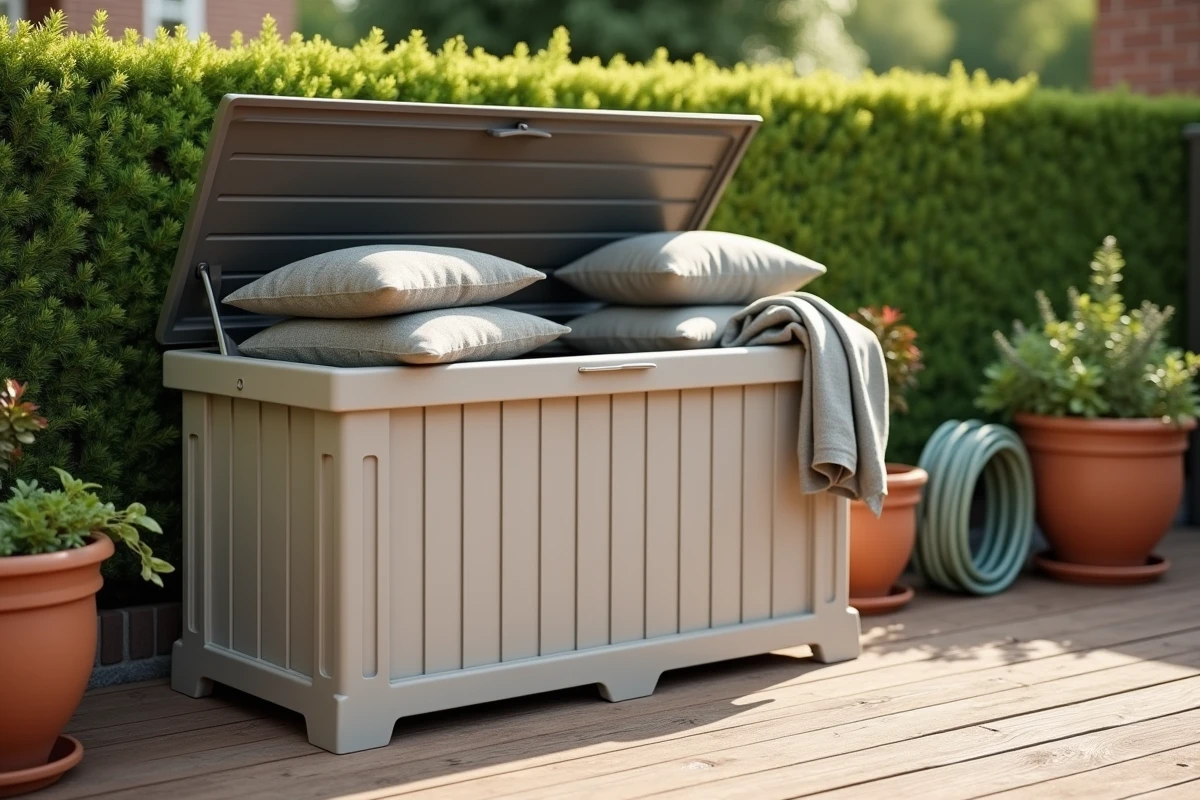
A garden chest is an outdoor storage box, typically made of resin, wood, or metal, designed to store cushions, tools, toys, or small gardening equipment protected from the elements. At Brico Dépôt, the catalog includes capacities ranging from compact models to versions exceeding one cubic meter, with prices positioned in the entry-level and mid-range segments.
Eco-contribution REP PMCB and prices of garden chests
Since May 1, 2023, the Extended Producer Responsibility for Building Products and Materials (REP PMCB) is fully operational in France. Garden chests classified as outdoor furnishing products may be subject to eco-contributions through the eco-organizations Valobat or Ecomaison.
Specifically, Ecomaison’s 2024 reports indicate a partial pass-through of these eco-contributions to the retail prices in the “garden furnishing” segment. This additional cost remains modest per unit, but it explains why a chest priced in 2022 at a certain rate may cost slightly more today, with no change in materials or design.
When browsing Brico Dépôt garden chests, you will notice that the eco-contribution rarely appears in isolation on the product sheet. Checking the total price including tax helps to understand the actual share of the product and that of the environmental tax.

Resin, wood, or metal: which material for an outdoor storage chest
The choice of material determines the durability, weight, and maintenance of the chest. Three families dominate the Brico Dépôt catalog.
Resin chests (polypropylene)
The majority of Brico Dépôt references are made of polypropylene. This material does not rot, rust, and can be cleaned with a water jet. Keter models, such as the OAK 570 L or the Emily 270 L, exemplify this category. Resin remains the best compromise between weight and strength for regular use on a terrace or balcony.
Point to watch: several manufacturers listed by Brico Dépôt, including Keter and Toomax, are gradually incorporating recycled resin into their ranges. This trend, documented in Keter’s 2023 CSR reports and the communications from the European Association of Recycled Plastics (PRE, 2024), does not appear on product sheets. If environmental considerations matter in your decision, you need to seek information directly from the manufacturer.
Wooden chests
Wood provides a natural aesthetic that blends better into a landscaped garden. The price is generally higher, and maintenance (staining, autoclave treatment) needs to be renewed every two to three years to avoid graying and mold. An untreated wooden chest degrades from the first season if exposed to rain.
Metal chests
Less common in the Brico Dépôt offering, metal chests are suitable for storing heavy tools. Their robustness is an advantage, but the screws and locks are prone to corrosion if the protective coating is scratched. Surveys by UFC-Que Choisir on garden shelters and storage indicate an increase in complaints related to the corrosion of screws and locks on this type of product.
Capacity and footprint: choosing the right size chest
The displayed volume gives an indication, but it does not tell the whole story. A 270-liter chest is sufficient for standard garden lounge cushions. Beyond that, 570-liter models can accommodate gardening equipment or bulky toys. The largest, around 1,200 liters, allow for the storage of a manual mower, hose, and folding furniture.
Before choosing, measure the available space and check three points:
- The usable internal depth, often reduced by the thickness of the walls, especially on double-walled resin models.
- The height under the open lid, which determines if you can slide in tool handles or folded umbrellas.
- The presence of wheels (like on the Emily 270 L model), which makes moving easier but slightly reduces stability on uneven ground.
A chest that is too large for the available space often ends up unused. It is better to have two medium-sized chests spread across the terrace than one XL model stuck in a corner.
Actual durability: weak points to check before purchase
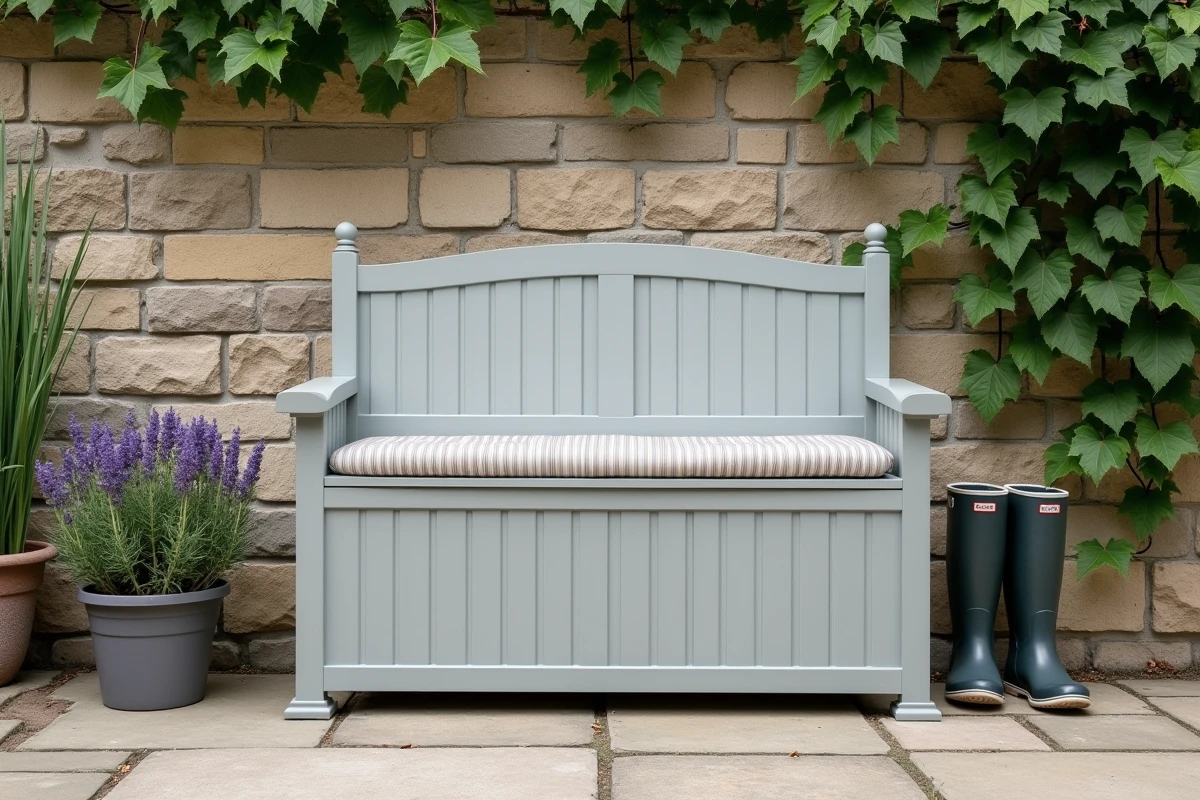
Customer service feedback on resin garden chests reveals recurring weaknesses. Surveys by UFC-Que Choisir (tests published in 2022, web updates in 2023) highlight two critical areas:
- The hinges and lid struts on resin chests, which do not withstand repeated openings and the weight of a lid loaded with rain.
- The locking systems, whose low-end latch mechanism sometimes fails after a few months of exposure to UV and moisture.
To limit these issues, check that the hinges are made of stainless steel or treated corrosion-resistant steel, not simple molded plastic. On Keter models sold at Brico Dépôt, gas struts are a good quality indicator: they keep the lid open effortlessly and reduce mechanical fatigue on the pivot points.
The advertised waterproofing does not protect against internal condensation. Even a chest described as waterproof allows ambient moisture to enter. Storing non-water-repellent fabric cushions in a closed chest all winter produces mold, regardless of the model. Regular ventilation or using a moisture absorber bag remains the only reliable solution.
The choice of a garden chest hinges on the material suitable for your use, the actual capacity once the walls are deducted, and the quality of wear parts like hinges. The Brico Dépôt range meets these needs at reasonable prices, provided you check these technical details rather than relying solely on the displayed volume.