
The Pinel scheme has not accepted new investments since January 1, 2025. Rental commitments made before that date continue to have tax effects, putting the Rennes market in a unique position: the existing supply of Pinel properties is dwindling, and managing current leases is becoming the main driver of profitability.
The end of Pinel and the remaining stock in Rennes: what changes in 2025
Properties acquired under Pinel in Rennes before the scheme closed remain subject to rental commitment requirements (six, nine or twelve years). Tax reductions continue to apply at the rates set when the deed was signed.
However, no new purchase can qualify for Pinel. This means that apartments still offered for rent under the scheme come exclusively from investors who completed their purchase before December 31, 2024. The stock is fixed.
For an investor looking to rent a Pinel apartment in Rennes, the direct consequence is less competition from newly built properties carrying the Pinel label, but also a need to pay closer attention to the terms of the original lease and to compliance with the rent caps that still apply.

Pinel rent caps in zone B1: how to calculate them and a common pitfall
Rennes is classified as a zone B1 under the Pinel scheme. The rent cap per square meter depends on this zone, but is adjusted by a multiplier based on the property’s usable floor area. The smaller the property, the higher the permitted rent per square meter.
The most common pitfall is applying the base cap without factoring in this multiplier. A compact one-bedroom apartment and a spacious two-bedroom apartment do not offer the same rental yield relative to their purchase price, even if they are in the same development.
Usable floor area and ancillary space
Pinel usable floor area is not the same as living area alone. It includes half the area of ancillary spaces (balcony, loggia, cellar), up to a limit of eight square meters. Underestimating this component means setting rent below the actual permitted cap, unnecessarily reducing the yield.
A good-sized balcony or loggia mechanically increases the rent cap, making apartments with outdoor space more attractive to investors at a comparable purchase price.
Rental market pressure in Rennes and setting the initial rent
Rennes is classified as a rent-pressure zone. This classification regulates rent increases when a property is re-let or a lease is renewed, based on the Rent Reference Index (IRL). However, the city does not apply the experimental rent control system based on an increased reference rent cap, as in Paris or Lyon.
In practice, the initial rent for a property being let for the first time is freely set, provided it complies with the Pinel cap. This is an advantage for recently completed new developments: landlords can set rent at the maximum permitted level without being constrained by a previous reference rent.
Implications for your entry strategy
An investor who buys a unit in a new development completed in 2024 can set the initial rent without any historical reference. However, if they buy a property that is already rented under Pinel, the current rent serves as the starting point, and any increase remains subject to the IRL. We recommend always checking the rent being charged before taking over a lease.
Energy ratings, rent increase restrictions and projected yield
The Energy Performance Certificate (DPE) is relevant not only when choosing a property to buy. Since August 2022, rent increases have been prohibited for properties rated F or G in mainland France, whether when re-letting or renewing a lease.
New Pinel apartments are generally built to RE2020 or RT2012 standards and have A or B ratings. The risk of rent increases being blocked due to the DPE is therefore low for recent properties. It becomes a real concern when considering a Pinel investment in a renovated property or one completed several years ago.
Checks to make before calculating your yield
- Check the property’s actual DPE rating, not the one stated in the development’s sales brochure, as there can be discrepancies between projections and the finished property.
- Make sure the lease includes a compliant rent review clause: a property rated E or higher allows annual increases in line with the IRL, while an F or G rating prevents them.
- Include actual condominium fees in your net yield calculation, as new developments with high energy performance sometimes have operating costs (double-flow ventilation, communal heating) that exceed initial estimates.
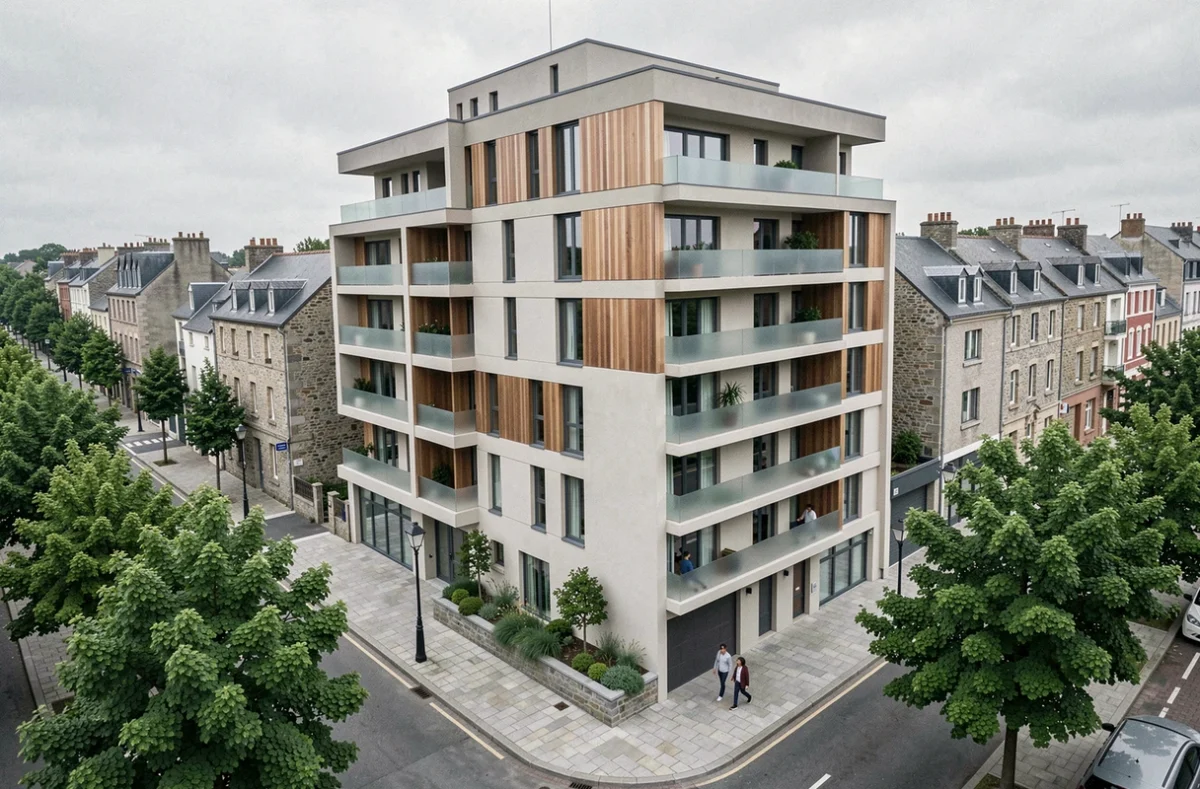
Rennes neighborhoods: balancing rental yield and capital appreciation
Rental demand in Rennes is driven by a large student population and the metropolitan area’s economic appeal. Not all neighborhoods serve the same investment goals.
- Areas near the Beaulieu or Villejean-Beauregard campuses attract strong student demand. Studios and one-bedroom apartments rent quickly, with low vacancy rates, but the potential for capital gains on resale remains moderate.
- The city center and areas around the train station (with TGV connections to Paris) attract young professionals and executives who relocate for work. Rents are higher, and the property’s medium-term appreciation prospects are more favorable.
- Developments in the inner suburbs (Saint-Jacques-de-la-Lande, Cesson-Sévigné) offer lower purchase prices. Gross yields are often higher, provided public transport links remain satisfactory.
Your choice of neighborhood determines the type of tenant and the length of vacancy. A studio in Villejean is not managed like a three-bedroom apartment in Cesson-Sévigné, either in terms of tenant turnover or maintenance costs.
Pinel rental investment in Rennes must now be managed like a closed portfolio: the stock is no longer replenished, the tax treatment is locked in on the date of the deed, and profitability depends above all on compliance with rent caps, the property’s energy performance and its location. Checking these three factors before making any purchase or taking over a lease remains the best way to protect yourself against disappointing returns.