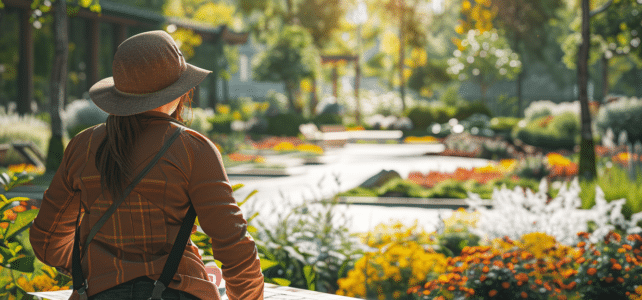
The design of green spaces is not just a simple aesthetic exercise. It is a complex science that requires a deep understanding of biodiversity, ecology, and social needs. Landscape professionals play a fundamental role in creating spaces that promote well-being, encourage biodiversity, and contribute to the ecological resilience of urban and rural environments. Their expertise allows for the creation of places that not only beautify the environment but also serve as habitats for wildlife, recreational spaces for communities, and green lungs for cities, thus combating urban heat islands.
The essential role of landscape professionals in the creation and design of green spaces
In the vast framework of green professions, the landscape professional holds a prominent position, acting as a true architect of nature. The landscape architect, at the heart of this profession, designs spaces with both aesthetic and functional vision, ensuring that every patch of greenery contributes to ecological balance and social well-being. These green spaces, crucial in contemporary urban planning, result from meticulous work that ranges from design to implementation, involving various experts such as the design landscape architect, the landscape draftsman, and the landscape gardener.
From the genesis of a project to the first shovel of dirt, the tasks of a landscape architect are varied and intertwined. In design offices, the design landscape architect imagines and sketches future spaces, while the landscape draftsman brings these ideas to life in detailed plans. On the ground, the landscape mason and the landscape gardener step in to bring the sketches to life by building and cultivating gardens, parks, and other collective breathing spaces.
The training of landscape professionals, often provided by institutions such as the École nationale supérieure de paysage, combines theory and practice to cover a wide range of skills: from botany to architecture, including urban planning and the environment. Their salaries reflect the diversity and complexity of their tasks, rewarding expertise that goes far beyond simple plant maintenance.
Jobs in the landscaping field are constantly evolving, forming a dynamic market where innovation and creativity intertwine. The landscape urban planner, for example, reinvents our cities by integrating green corridors and biodiversity spaces, thus reconciling humans with their environment. These professionals are the guarantors of harmonious, sustainable, and ecosystem-respecting development, playing a decisive role in the transition to greener and healthier living environments.
The environmental and social stakes of professional landscaping
Landscaping, far from being a mere aesthetic affair, is deeply rooted in current environmental issues. Professionals in the field, such as Gilles Clément, emphasize the need to design gardens that respect biodiversity, reflecting the delicate balance between human development and nature conservation. The integration of native flora, the creation of ecological corridors within urban spaces, and the thoughtful maintenance of sports areas are all actions that contribute to the health of our environment. Landscape architects, as actors in this urban ecosystem, bear the responsibility for the sustainability and biological richness of the territories they shape.
In the social realm, landscaping proves to be a vector of social and technological innovation. Landscaping projects led by figures such as Louis Benech, who has participated in the creation of numerous public and private gardens, strengthen community cohesion and promote inclusion. Green spaces become places for meeting, relaxation, and play, essential to the urban social fabric. These spaces are designed to be accessible and beneficial to all, regardless of age or social condition, thus highlighting the universal dimension of the right to nature in the city.
The educational aspect of these spaces should not be overlooked. Institutions like the École nationale supérieure de paysage are the cradle of training for these professionals, where the emphasis is placed on a holistic approach that encompasses architecture, urban planning, and the environment. This multidisciplinary training prepares future landscape architects to meet contemporary challenges: to create spaces that serve as living examples of respectful environmental management while being vectors of well-being and social connection. These professionals, heirs to visionaries like André Le Nôtre, are called to be the guardians of a green heritage that extends far beyond French formal gardens, towards a future where nature and society coexist in harmony.