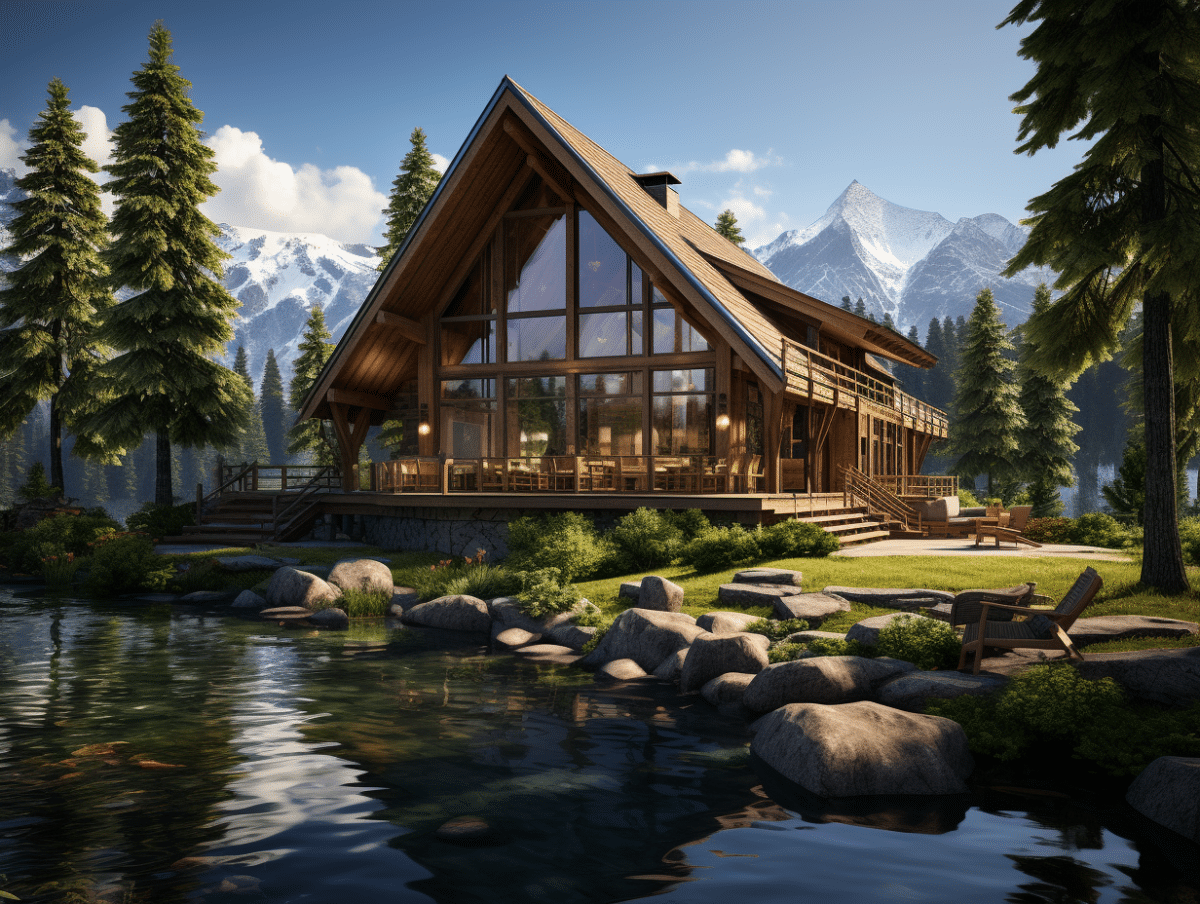
The appeal of alternative habitats has grown, with particular attention given to chalets located on buildable land. These structures offer an escape from urban turmoil and proximity to nature, often favored by those seeking a more serene and ecological lifestyle. However, choosing a chalet as a primary or secondary residence is not without constraints. These homes must comply with current regulations, involving challenges related to building permits, insulation, and access to public services, while managing environmental impact.
The advantages of choosing a chalet on buildable land
Compliance with the Local Urban Plan First and foremost, answering the question ‘can one live in a chalet on buildable land?’ requires considering the Local Urban Plan (PLU). This fundamental document determines the areas where alternative housing, including chalets, is permitted. Often located in urban areas already equipped with infrastructure, these plots offer the possibility to build within a legal and secure framework while respecting sanitation zoning.
Integration into a natural environment Building a chalet on buildable land allows for a blend of modern comfort and immersion in nature. Alternative habitats, such as yurts, tiny houses, caravans, or tipis, must comply with the requirements of the PLU, but they benefit from the attractiveness of being in urban areas, where access to public services is facilitated and where facilities are already in place or under development.
Flexibility and customization Choosing a chalet as an alternative habitat on buildable land offers a welcome margin for customization. Owners can design a living space that reflects their ecological and aesthetic values while ensuring compliance with PLU standards. This is a significant advantage for those seeking a tailor-made home that meets their aspirations for an alternative lifestyle.
Addressing ecological challenges Installing a chalet on buildable land can be part of a sustainable and environmentally friendly housing approach. Indeed, these constructions are often designed to minimize their ecological impact, using natural and renewable materials, and optimizing energy and sanitation systems. This approach, consistent with current ecological concerns, offers a compelling alternative to traditional housing.

Constraints to consider before settling in a chalet
Compliance with current legislation The Law for Access to Housing and Renovated Urban Planning, known as the Alur Law, strictly regulates the installation of alternative habitats. Subject to this legislation, chalets often must comply with specific rules, particularly regarding non-buildable areas. While the Alur Law provides exceptions for lightweight habitats on certain plots, the majority of installations remain dependent on a Local Urban Plan that delineates four distinct zones with their own constraints.
The zones of the PLU: a complex puzzle The Local Urban Plan distinguishes between urbanizable zones, intended to be opened for construction, and agricultural zones or natural and forest zones, protected due to their ecological or agronomic value. For a chalet, installation in agricultural zones is restricted to agricultural use, while natural and forest zones generally prohibit any construction. A precise understanding of zoning is therefore fundamental for anyone considering settling outside conventional habitats.
Challenges of planning and municipal recognition The “dots,” zones dedicated to lightweight and removable housing, represent a boon for alternative housing. Their development by municipalities often remains limited, making the installation and official recognition process complex. Even in urban areas, a declaration at the town hall is necessary to establish the legitimacy of the habitat. These administrative procedures, far from trivial, require attention and perseverance from aspiring residents.